Τετάρτη 3 Ιουλίου 2024

The Great Hypostyle Hall of the Temple of Karnak. Luxor, Egypt


The Great Hypostyle Hall of the Temple of Karnak. Luxor, Egypt.

The Great Hypostyle Hall covers an area of 5,000 m2 (54,000 sq ft). The roof, now fallen, was supported by 134 columns arranged in 16 rows; the two central rows are taller than the others (being 10 meters (33 ft) in circumference and 24 meters (79 ft) high). The 134 papyrus columns represent the primordial papyrus swamp from which Atum, a self-created deity, emerged from the waters of Nun at the beginning of creation. The hall was not built by Horemheb, or Amenhotep III as previous scholars had thought, but was built entirely by Seti I who inscribed the northern wing of the hall with inscriptions. The decoration of the southern wing was completed by the 19th Dynasty pharaoh Ramesses II.

Mythistoria


The bronze equestrian statue of Marcus Aurelius


This bronze equestrian statue of Marcus Aurelius was originally on the Capitoline Hill, before being moved into the Capitoline Museum in 1990. In 1997, a replica was placed on the square.

The original statue is 4 meters high, almost 4 meters wide and weighs over 2500 kg. It depicts the emperor with an outstretched army talking to his citizens (allocutio). The statue was originally gilded, some trace of this can be seen on the statue.
It was either created in 176 AD to celebrate the emperor's victory over the German tribes or in 180 AD, shortly after his death. The reason why the statue is so well preserved, is because for a long time it was thought to be a depiction of the emperor Constantine.
Therefore, the bronze was not melted over and could be preserved. This deduction was made based on facial similarities between the statue and figures depicted on the triumphal arch of Constantine. This was later proved wrong as fragments of older arches were used in the building of Constantine's arch, including that of Marcus Aurelius.

Mesopotamia


 Around 5,000 years ago, the Sumerians, who lived in ancient Mesopotamia (modern-day Iraq), revolutionized how we perceive and measure time. They developed a sophisticated numerical system based on the number 60, known as the sexagesimal system. This unique system led to the division of an hour into 60 minutes and a minute into 60 seconds, concepts that are still in use today.

The Sumerians' need for precise timekeeping was driven by their agricultural society. Accurate calendars were essential for planting and harvesting crops. They also needed to coordinate their complex religious ceremonies and administrative activities.
To aid their timekeeping, the Sumerians made significant advancements in astronomy. They observed the movements of celestial bodies and used this knowledge to create a lunar calendar with 12 months, which closely aligned with the agricultural seasons.
The division of the day into 24 hours, each hour into 60 minutes, and each minute into 60 seconds was a monumental achievement. These divisions were not arbitrary but were designed to be practical and easily divisible, reflecting the Sumerians' advanced understanding of mathematics.
This innovative approach to time had a profound impact on later civilizations, including the Babylonians, Greeks, and Romans, who adopted and further developed the Sumerian system. The legacy of the Sumerians' timekeeping system is evident in our modern clocks and calendars, demonstrating the enduring influence of their ingenuity on our daily lives.

The Sumerians


Around 5,000 years ago, the Sumerians, who lived in ancient Mesopotamia (modern-day Iraq), revolutionized how we perceive and measure time. They developed a sophisticated numerical system based on the number 60, known as the sexagesimal system. This unique system led to the division of an hour into 60 minutes and a minute into 60 seconds, concepts that are still in use today.

The Sumerians' need for precise timekeeping was driven by their agricultural society. Accurate calendars were essential for planting and harvesting crops. They also needed to coordinate their complex religious ceremonies and administrative activities.
To aid their timekeeping, the Sumerians made significant advancements in astronomy. They observed the movements of celestial bodies and used this knowledge to create a lunar calendar with 12 months, which closely aligned with the agricultural seasons.
The division of the day into 24 hours, each hour into 60 minutes, and each minute into 60 seconds was a monumental achievement. These divisions were not arbitrary but were designed to be practical and easily divisible, reflecting the Sumerians' advanced understanding of mathematics.
This innovative approach to time had a profound impact on later civilizations, including the Babylonians, Greeks, and Romans, who adopted and further developed the Sumerian system. The legacy of the Sumerians' timekeeping system is evident in our modern clocks and calendars, demonstrating the enduring influence of their ingenuity on our daily lives.

The Anunnaki Enigma


 The Anunnaki Enigma" delves into the mysterious realm of ancient Mesopotamian mythology, focusing on the enigmatic beings known as the Anunnaki. Revered as gods by the Sumerians, Akkadians, and Babylonians, the Anunnaki were believed to have descended from the heavens to Earth, shaping the course of human history in profound ways.

According to ancient texts such as the "Enuma Elish" and the "Atrahasis Epic," the Anunnaki played pivotal roles in the creation of humanity, the establishment of civilization, and the development of early cultures. Their origins, however, remain shrouded in mystery, with some interpretations suggesting extraterrestrial or otherworldly origins.
One of the central enigmas surrounding the Anunnaki revolves around their purported advanced knowledge and technology. From the construction of monumental structures like the ziggurats to their alleged genetic manipulation of humans, the Anunnaki are often depicted as possessing capabilities far beyond those of ancient civilizations.
In modern times, the concept of the Anunnaki has become intertwined with fringe theories such as ancient astronaut theory and conspiracy narratives. Some proponents argue that the Anunnaki continue to influence human affairs, shaping our societal structures, religious beliefs, and technological advancements.
Despite the lack of concrete evidence for the existence of the Anunnaki as physical beings, their legacy endures as a captivating enigma that continues to inspire speculation, debate, and exploration into the depths of ancient mythology and the origins of human civilization.

Πέμπτη 13 Ιουνίου 2024

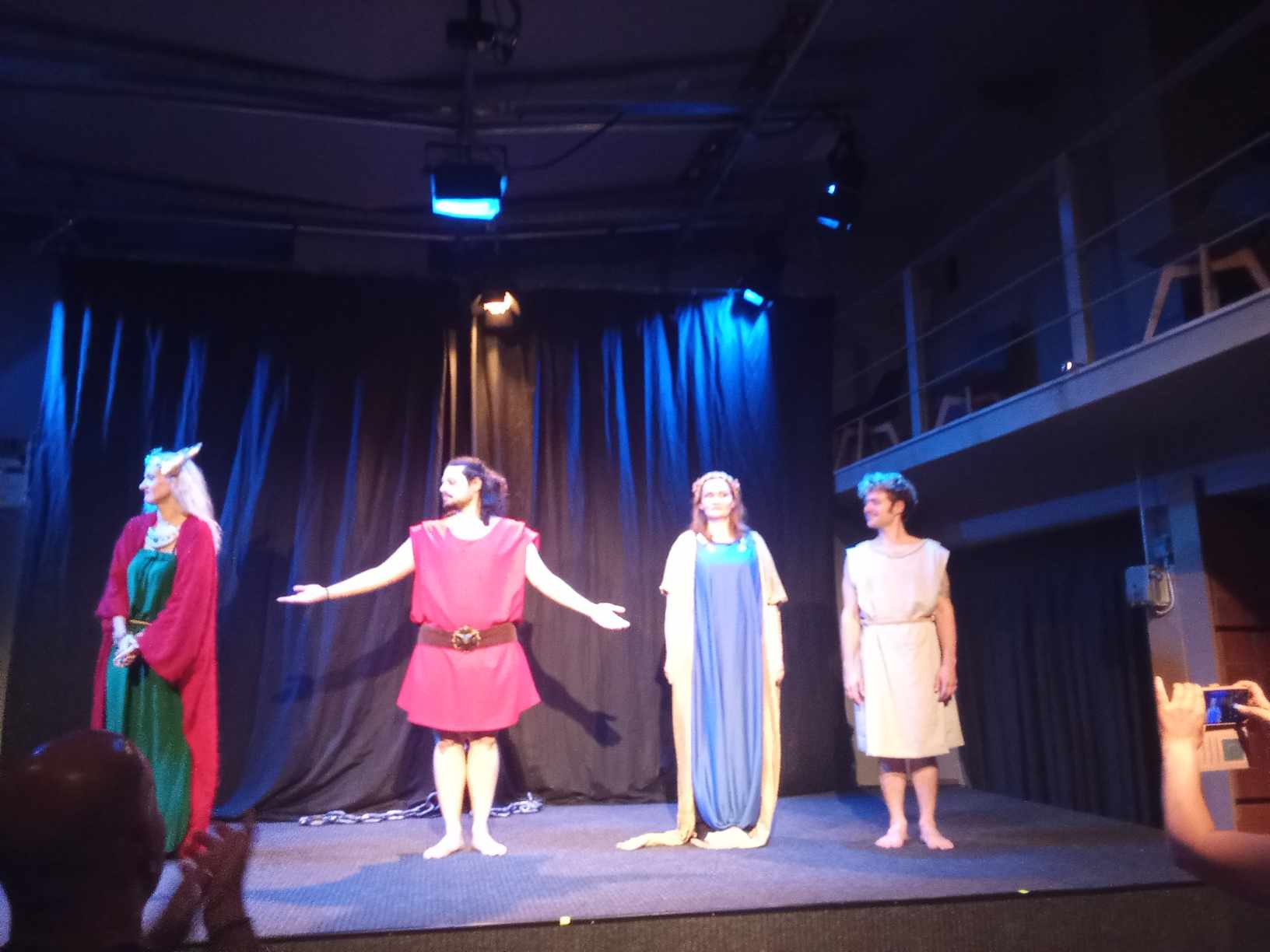
Prometheus Bound by P. Karousos at Theatre of the NO


Prometheus Bound by P. Karousos at Theatre of the NO

PROMETHEUS BOUND: THE OPERA Every Wednesday: 20.00 from 12th June – 24th July Duration: 90’ CAST Composed by: Panagiotis Karousos Prometheus: George Housakos, baritone Io: Irini Konsta, soprano Oceanid: Hlín Leifsdóttir, soprano Ocean/Hermes: Stefanos Kaltsis, tenor Piano: Christiana Manou Stage direction: Irini Konsta CREATIVE TEAM PHOTOGRAPHER: Nikos Pagonakis COMMUNICATIONS and PUBLICITY: Eleftheria Sakareli EXECUTIVE PRODUCER: Fail Better Productions THEATER OF THE NO, the first English-speaking theater in Athens, presents the Opera "Prometheus Bound", with music and libretto by Panagiotis Karousos. The production, based on the ancient tragedy written by Aeschylus, will premier on June 12, 2024, and run for a limited engagement of 7 performances, every Wednesday at 20:00, from May 29 to July 24, 2024. Prometheus Bound is a melodic opera that follows the journey of Prometheus, a symbol of independence and enlightenment and infused with romanticism and lyrical exuberance, transporting the listener into a magical mysterious world. The timeless myth of Prometheus remains profoundly relevant, presenting humanity with the eternal dilemma of rebellion against tyrannical power in any historical era, and the destructive effect of passive attitudes. The rebellious Prometheus is the first known individual who rebelled against the authorities for the sake of the people, rebelling against the power of Zeus who was trying to exterminate the human race. Prometheus Bound originally premiered in Montreal, Canada in 1994 and was performed intermittently in New York, Washington DC and Paris. The theater, which opened its doors on April 18, 2024, with Samuel Beckett's "Waiting For Godot," is dedicated to embracing diversity and creativity. We welcome new writers and creators from Greece and around the world to share their voices on our stage. Our programming includes a wide range of genres and styles, from thought-provoking dramas to avant-garde experiments, encompassing Modernist, Absurdist, and Experimental Theatre, as well as Music, Poetry, and Performance Art. In 2024, THEATRE OF THE NO will stage two operas, followed by three new operas in the 2025 season, spotlighting new and upcoming opera composers and introducing young audiences to this wonderful form of art. Sponsored by XPAT ATHENS, Pizzafan, openmindtheater XPat Athens Website Visit us: Official Website Facebook: Theatre Of The NO Instagram: @theatreoftheno https://www.more.com/music/prometheusbound/


ΑΡΙΣΤΕΙΟ ΜΠΟΔΟΣΑΚΗ 2024


ΑΡΙΣΤΕΙΟ ΜΠΟΔΟΣΑΚΗ 2024

Με ιδιαίτερη χαρά, το Ίδρυμα Μποδοσάκη ανακοινώνει τους δύο διακεκριμένους επιστήμονες στους οποίους απονέμεται το Αριστείο Μποδοσάκη για το 2024 για την καθοριστική τους συμβολή στην εξέλιξη της επιστήμης. Τα Αριστεία Μποδοσάκη θα απονείμει η Α.Ε. η Πρόεδρος της Δημοκρατίας Κατερίνα Σακελλαροπούλου σε τελετή που θα πραγματοποιηθεί στο Ζάππειο Μέγαρο, την Τρίτη 25 Ιουνίου 2024.
▪️ Στο πεδίο των Θετικών Επιστημών: Χρύσα Κουβελιώτου, Καθηγήτρια Αστροφυσικής στο Τμήμα Φυσικής του Columbian College of Arts and Sciences στο The George Washington University. Η έρευνά της διεθνώς καταξιωμένης αστροφυσικού, με θητεία άνω των 25 ετών στη NASA, Χρύσας Κουβελιώτου, στο πεδίο της Αστροφυσικής Υψηλών Ενεργειών και ειδικότερα η μελέτη φαινομένων που σχετίζονται με τις μαύρες τρύπες, τους αστέρες νετρονίων και τις εκλάμψεις ακτίνων γάμμα διεύρυνε τη γνώση και κατανόηση των ουράνιων φαινομένων.
▪️ Στο πεδίο των Ιατροβιολογικών Επιστημών: Νεκτάριος Ταβερναράκης, Καθηγητής Μοριακής Βιολογίας Συστημάτων στην Ιατρική Σχολή του Πανεπιστημίου Κρήτης, Πρόεδρος του Ίδρυμα Τεχνολογίας και Έρευνας, και Πρόεδρος του EIT - European Institute of Innovation and Technology. Ο Νεκτάριος Ταβερναράκης βρίσκεται στην αιχμή της σύγχρονης βιοϊατρικής έρευνας στους τομείς της γήρανσης, του κυτταρικού θανάτου και του νευροεκφυλισμού, ενώ έχει δημιουργήσει τις προϋποθέσεις διασύνδεσης του ΙΤΕ και του ερευνητικού ιστού της χώρας μας με την ευρωπαϊκή και τη διεθνή ερευνητική κοινότητα, ώστε η Ελλάδα να συμμετέχει και να συνδιαμορφώνει τις εξελίξεις και τις πολιτικές έρευνας στην Ευρώπη.
Θερμά συγχαρητήρια στους βραβευθέντες που με το πρωτοποριακό επιστημονικό τους έργο δίνουν στην ελληνική πνευματική παραγωγή παγκόσμια αίγλη.
Μάθετε περισσότερα: https://tinyurl.com/46kdd87e

Atom

  An atom is far more complex than the familiar diagrams showing electrons orbiting a nucleus like planets around the Sun. This remarkable v...